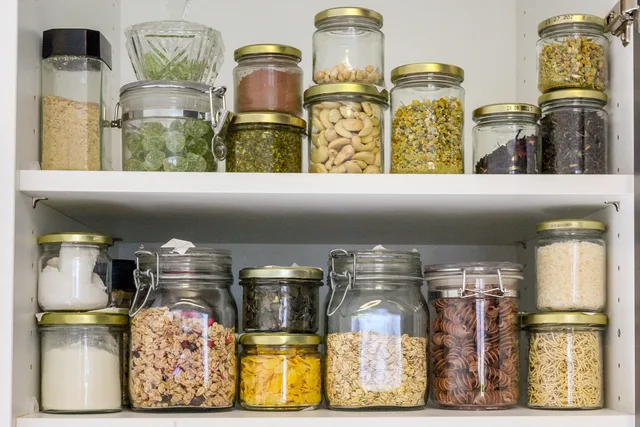
Features
Part of Inside a typical pantry organization project, stage by stage
How long does a pantry organization project really take?
How long a pantry project takes, hour by hour and week by week, including emergency supply rotation and the seasons worth avoiding entirely.
A pantry can be emptied in an hour and reorganized in a day. What takes longer is deciding what to keep, arranging for what leaves, and living with the result long enough to correct it.
What to take away
- The sorting hour is the one that always overruns.
- Emergency supplies need their own rotation schedule, not a shelf.
- Avoid the weeks either side of a major holiday.
- Judge the layout after a full shopping cycle, not on the day.
Day one: empty and sort
Three to five hours in a typical pantry.
Day One: Empty and Sort
- 30 minEmpty and wipe shelves
- 2-3 hoursSort and decide on expired items
- 1 hourBag removals and stage relocations
Do not shop on day one. Nothing you buy before the sort will fit the pantry you end up with.
Day two: measure, set and load
Two to four hours.
Day Two: Measure, Set, Load
- Measure tallest items in each category
- Set shelf heights with tolerance
- Load by zoneheavy low, daily at hand height
- Write the rule and tape it inside the door
Week two: the emergency supply pass
Most pantries hold some emergency stock, and that stock needs a date rather than a shelf. For water storage, use containers intended for it.
FEMA's guidance on preparing your own containers of water recommends food grade water storage containers. It warns against jugs or cardboard containers that held milk or fruit juice, because residues support bacterial growth. It also warns against glass, which breaks and is heavy.
Set a calendar reminder for the rotation rather than trusting yourself to notice. This is the single task most likely to be skipped for three years.
Weeks four to eight: the correction
Live with the layout through at least one full shopping cycle, then make one round of adjustments. Typical corrections are a shelf height that was set too tight, a zone that fills faster than expected, and a container size that turned out wrong.
Seasons to avoid
Do not start a pantry project in the fortnight before a major holiday. The kitchen is at its busiest and its most hazardous. NFPA publishes Thanksgiving safety guidance aimed at preventing cooking fires, which is a reminder that this is the wrong week to have the contents of a pantry spread across the kitchen floor.
Good windows are early in the year, late spring, and any quiet stretch before bulk buying starts. Late summer works too, provided the household is not already stockpiling for the school term.
A workable schedule
| When | Work | Hours |
|---|---|---|
| Day 1 | Empty, sort, stage removals | 3 to 5 |
| Day 2 | Measure, set shelves, load | 2 to 4 |
| Week 2 | Emergency stock, dates, rotation | 1 |
| Weeks 4 to 8 | One correction pass | 2 |
The same phase logic applied to whole rooms is in the small-space timeline, and the detail of what happens in each stage is in the pantry project guide.