Maintenance
Part of Inside a typical pantry organization project, stage by stage
Pantry organization regrets homeowners mention again and again
What people regret after reorganizing a pantry: decanting into glass, matching containers bought too early, latches trusted too far and deep shelves.
Pantries are the most photographed and least durable organizing projects in the house. The regrets are consistent, and almost all of them involve buying containers before understanding the contents.
What to take away
- Decanting removes the information printed on the packet.
- Glass looks best and is the heaviest thing on a high shelf.
- Child latches are a backup control, not a primary one.
- Deep shelves hide food until it expires.
Regret one: decanting into glass at height
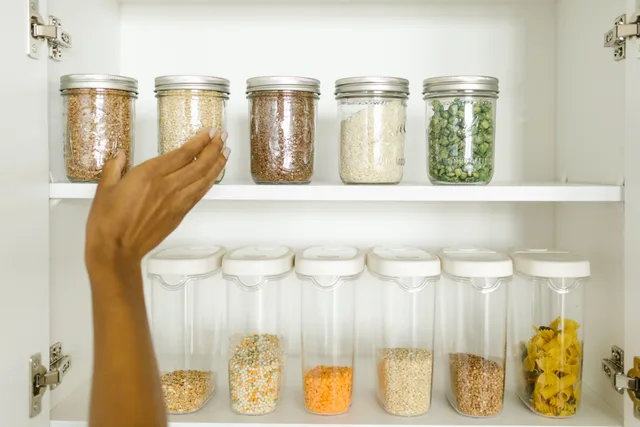
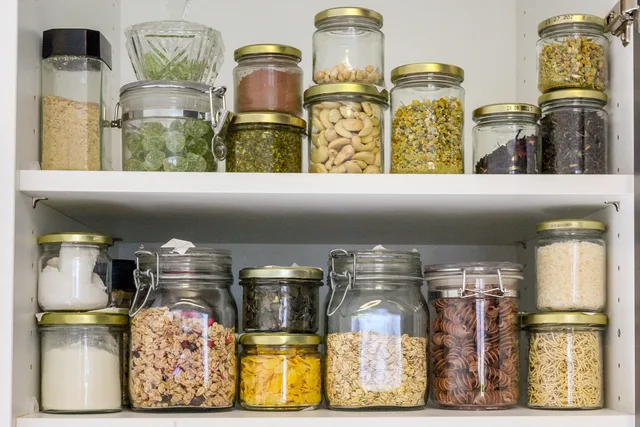
Uniform glass jars photograph beautifully. They are also heavy, breakable, and usually placed high because that is where the display value is.
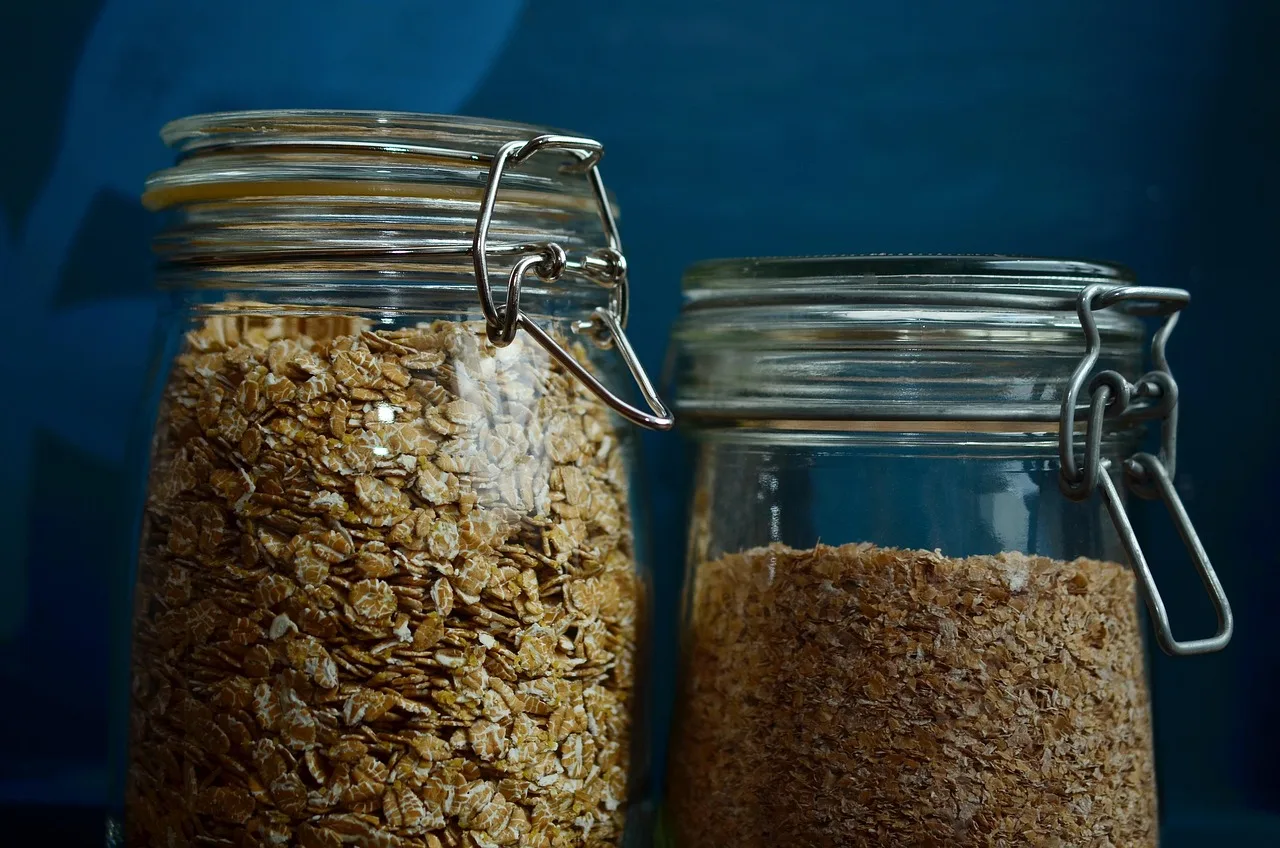
Glass food containers are a product category with its own failures. In 2016, i play recalled glass food storage cubes after reports that they posed an injury hazard. More broadly, weight and breakability argue for keeping glass low and using lighter containers above shoulder height.
Decanting also discards cooking instructions, allergen information and dates. If you decant, transfer the date and the instructions, or keep the packet folded inside.
Regret two: buying the containers first
The single most common pantry regret: households buy a matched set, then discover jars too wide for the shelf, too short for the pasta, or too numerous for what remains after the purge.
Sort, measure, then buy
- Sort pantry items and purge first
- Measure shelf depth
- Measure tallest box
- Buy fewer containers than you think
- Check jars fit width, height, count
Sort, measure, then buy. Buy fewer than you think. Measure shelf depth and the tallest box before buying, because small-space storage ideas live or die on those two numbers.
Regret three: trusting the latch
Kitchens push cleaning products into low cupboards, and latches follow. Latches help, but they are not the primary control, and they fail.
Safety 1st recalled about 900,000 cabinet locks in 2012 after 200 reports of locks that did not adequately secure the cabinet, with the firm aware of 140 children between nine months and five years old who disengaged the locks. In three reported incidents, children who gained access swallowed or handled dishwashing detergent, window cleaner or oven cleaner.
The primary control is height and separation. Hazardous products go high or out of the kitchen, in their original child-resistant packaging, with the latch as a second layer.
Regret four: deep shelves
Anything deeper than two rows of jars becomes an archive. The back row is invisible, then forgotten, then thrown away. Where depth is fixed, use pull-out trays or shallow baskets that come forward as a unit.
The corner cupboard is the extreme case. Households often report finding the same three tins in a deep corner every year, each time deciding to use them soon, and each time putting them back. A rotating tray or a decision to store only non-perishables in that corner solves it permanently.
Regret five: no rule about intake
A reorganized pantry with unlimited intake is a reorganized pantry for about six weeks. Set a fixed volume per zone and treat overflow as a shopping signal rather than a storage problem. The same pattern appears across small homes generally, as the small-space regrets piece describes.
What worked instead
- Shallow shelves with lightweight, opaque containers above eye level.
- Original packaging kept for anything with an expiry date.
- Chemicals stored outside the food zone entirely.
- One empty shelf held in reserve.
The stage-by-stage version of a project that avoids these outcomes is in the pantry project guide.
None of these regrets involve spending too little. Every one of them involves buying before deciding, which is the cheapest mistake to avoid and the hardest to resist in a shop full of matching jars.