Industry
Part of Ranking organization mistakes from blocked exits to cosmetic complaints
Five home storage mistakes that keep repeating and how to stop them
Five repeating home storage mistakes: unanchored tall units, lead paint risk, load ratings taken literally, blocked exits, and undocumented hardware swaps.
Five patterns repeat across real projects: tall unsecured units, unasked finish hazards, load ratings taken literally, storage that migrates into circulation space, and undocumented substitutions. Each comes from a documented product failure, and each shows a decision homeowners repeat.
The 2022 and 2023 recalls cited below are historical examples, not current alerts.
What to take away
- Height and slenderness are the geometry that fails.
- A finish can be a hazard, particularly on older furniture.
- Small recall numbers do not mean small consequences.
- The failure is usually in the decision, not the product.
Pattern one: tall, narrow and unsecured
The classic failure is a slender unit loaded high and never fixed to a wall. TJX recalled bookcases in 2023 after two reports of bookcases that were unstable and began to tip forward, the units being about 86 inches tall on four legs.
Homeowners pick a shape for the space available, not for stability, then treat anchoring as optional. Only 73 units were involved. A small recall is still a hazard.
Action step: anchor the unit into a stud or a wall anchor rated for the load, and keep the heaviest items on the bottom shelf.
Anchoring is a safety step, not a style choice. The same logic applies to every small-space storage upgrade you rank by daily payback.
Pattern two: the finish nobody asked about
Storage furniture carries paint and coatings, and older or reissued designs can carry more than expected. MillerKnoll recalled about 700 desk and storage units in 2022 because surface paint on the tan side panels contained lead exceeding the federal lead paint ban, posing a lead poisoning hazard.
The decision behind it: assuming that anything sold new, or anything sold expensively, cannot carry a chemical hazard. Action step: ask about finishes for anything going into a child's room, and treat pre-1978 secondhand furniture with the same caution as pre-1978 paint anywhere else.
Pattern three: the printed load rating taken literally
Shelving is sold with a number on the box, and households treat it as a promise. Ratings assume even loading, correct assembly and level ground, and real installations rarely meet all three. Ratings on the box assume ideal conditions, so check the storage systems checklist, a room-by-room list of anchoring and exit clearance checks, before you load a shelf.
The failure is loading to the maximum on day one. Action step: load to a fraction of the rating, keep weight low, and watch for deflection. A shelf that has visibly bowed has already told you the answer, and it will not recover when you unload it.
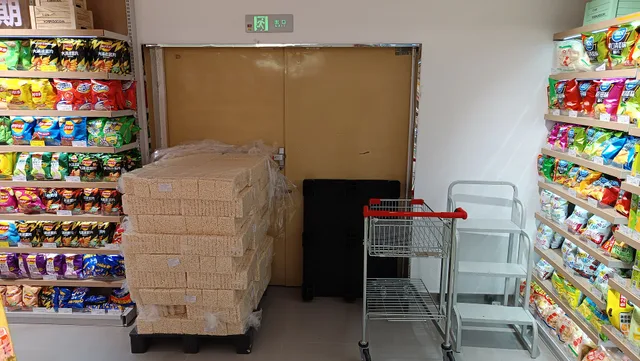
Pattern four: storage that migrated into circulation space
No product recall documents this one because no product is at fault. A room gets organized, the overflow lands in a hallway, and the escape route quietly changes. The failure is planning capacity without planning outflow.
Action step: name one overflow spot with a fixed size, and clear it every week.
It is also the failure that takes longest to notice, because it arrives in single items rather than in one move. A household that would never build a shelf across a corridor will happily let one accumulate there over a season.
Pattern five: the undocumented substitution
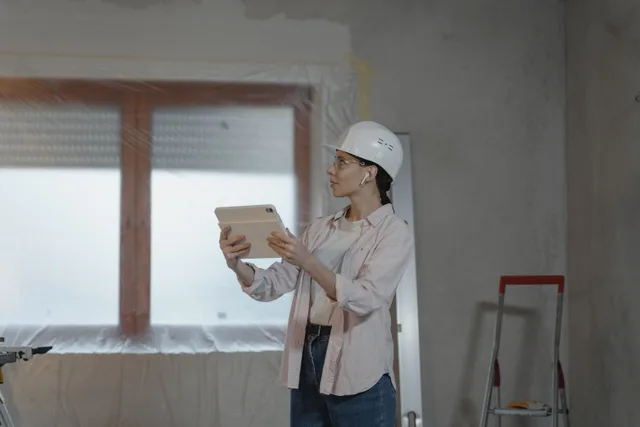
An installer runs out of the specified fixing and uses what is in the van. A year later the strap has degraded and nobody knows what was fitted. The decision behind it is treating hardware as a detail rather than as the part that carries the consequence.
Action step: photograph the fixing, and record its type on the invoice before the installer leaves.
What the five have in common
Each is a decision made for convenience at a moment when the consequence was invisible. That is why the ordering in the mistakes pillar, our ranked list of organization mistakes, matters, and why the drift in the off-track piece, our account of storage that spills out, repeats.
Working through them in that order also gives a household an early win. The exit walk and the anchor check are finished in an afternoon, which builds enough momentum to carry the slower structural work that follows.